Description:
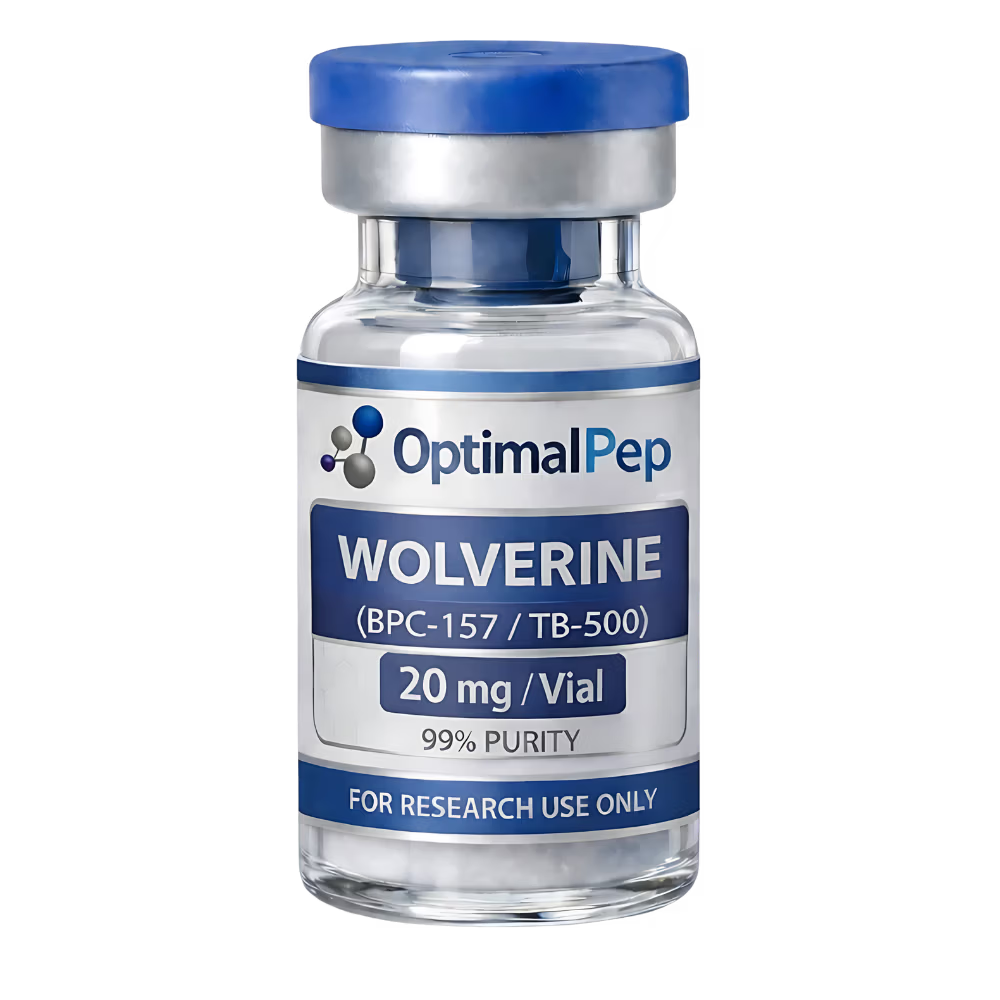
Wolverine — Dual-Peptide Research Formulation (BPC-157 + TB-500)
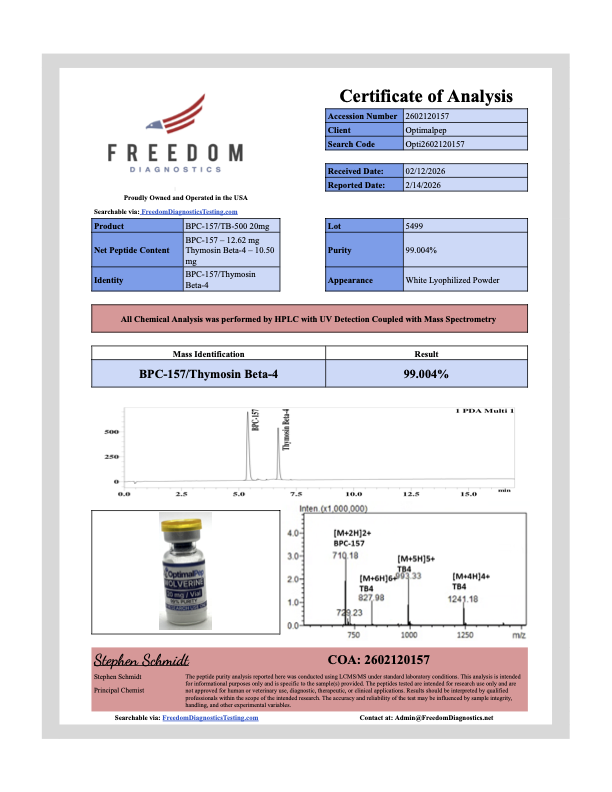
Wolverine is a dual-peptide research formulation combining BPC-157 and TB-500 (Thymosin Beta-4 fragment) into a single lyophilized vial. This consolidated format preserves the full 20 mg total peptide content—10 mg BPC-157 and 10 mg TB-500—while enabling investigation of complementary tissue-signaling pathways within a unified research system.
BPC-157 is a gastric-derived pentadecapeptide fragment studied in preclinical research for its involvement in tissue protection, angiogenic signaling, microvascular integrity, and inflammatory pathway modulation. Research frequently examines its relationship to nitric-oxide signaling, epithelial stability, and cytokine balance across a range of experimental models.
TB-500 (Thymosin Beta-4 fragment) is a synthetic peptide corresponding to the active region of the naturally occurring actin-binding protein thymosin beta-4. In laboratory settings, TB-500 is evaluated for its role in cellular migration, cytoskeletal organization, and extracellular matrix (ECM) remodeling, particularly in models focused on tissue repair dynamics.
When combined, BPC-157 and TB-500 present complementary mechanisms of research interest: BPC-157 contributing to vascular stability and inflammatory signaling, and TB-500 supporting actin-mediated cell motility and structural reorganization. This pairing is frequently explored in preclinical research assessing coordinated tissue-repair signaling and potential additive or synergistic pathway interactions.
Research areas of interest include:
- Musculoskeletal and connective-tissue models, including muscle, tendon, and ligament research
- Angiogenesis and microvascular studies examining vascular support mechanisms
- Cytoskeletal and cellular-migration investigations involving fibroblast and endothelial cells
- Inflammatory-response signaling, including cytokine and tissue-stress pathways
- Wound-healing and tissue-regeneration models focused on ECM organization and remodeling
Intended Use:
For laboratory research use only. Not for human or veterinary use.